Your water softener works hard every day, and most homeowners never think about it until something goes wrong. A few minutes of maintenance each season keeps your system running the way it should. Skip it, and you’ll notice: scratchy towels, spotted glasses, and a water heater working overtime.
If you live in Red Wing, Lake City, or anywhere along the Mississippi River valley, hard water is part of daily life. Good maintenance is what keeps it from becoming a daily problem.
According to the Water Quality Association, properly maintained water softeners can provide many years of reliable service, although components such as resin may require replacement depending on water quality and usage.
How Often Does a Water Softener Need Maintenance?
Homeowners should inspect their water softener every one to two months and perform a deeper cleaning once a year. If you have well water with high iron levels, more frequent maintenance may be needed. Annual professional servicing can identify worn parts before they lead to expensive repairs.
Your Seasonal Water Softener Maintenance Checklist
Most water softener maintenance tasks take less than 15 minutes and help keep your system operating efficiently. Following a regular water softener maintenance schedule improves efficiency, extends the life of your system, and helps prevent expensive repairs.
Do these checks every one to two months, and add a deeper look each season.
- Check salt levels. Keep the brine tank at least one-third full. Don’t overfill; salt should sit below the water line, not stacked to the top.
- Look for salt bridges. A salt bridge is a hard crust that forms above the water in the tank, leaving an empty space below. Water can’t reach the salt, so no softening happens even though the tank looks full. Break it up gently with a broom handle if you find one.
- Inspect the brine tank for mush. Salt mush is a thick sludge that collects at the bottom of the tank. It clogs the system and needs to be cleaned out by hand.
- Clean the resin bed once a year. A resin cleaner formulated for water softeners removes iron and sediment buildup that plain salt can’t touch. This matters more if your well water runs high in iron, which is common in parts of Goodhue and Wabasha counties.
- Test your water hardness twice a year. A simple test strip tells you whether the softener is actually keeping up. If hardness creeps back up between regenerations, something needs attention.
Winter is worth calling out on its own. Cold snaps can freeze brine lines that run through unheated garages or crawl spaces, so it’s worth checking that line specifically once temperatures drop.
Signs Your Softener Needs Professional Maintenance
Regular water softener maintenance helps keep your system working efficiently. Watch for these warning signs:
- Hard water spots keep returning on dishes, shower doors, or fixtures, even after regeneration.
- Water pressure drops throughout your home without another obvious cause.
- Your system uses salt much faster than normal or regenerates at unusual times.
- Your water develops an unpleasant taste or odor after passing through the softener.
Problems like worn resin, clogged media, or a faulty control valve require professional diagnosis and repair. If you’ve noticed any of these signs, scheduling a service appointment can restore your water quality, improve system performance, and help extend the life of your water softener.
DIY Water Softener Maintenance vs. Professional Service
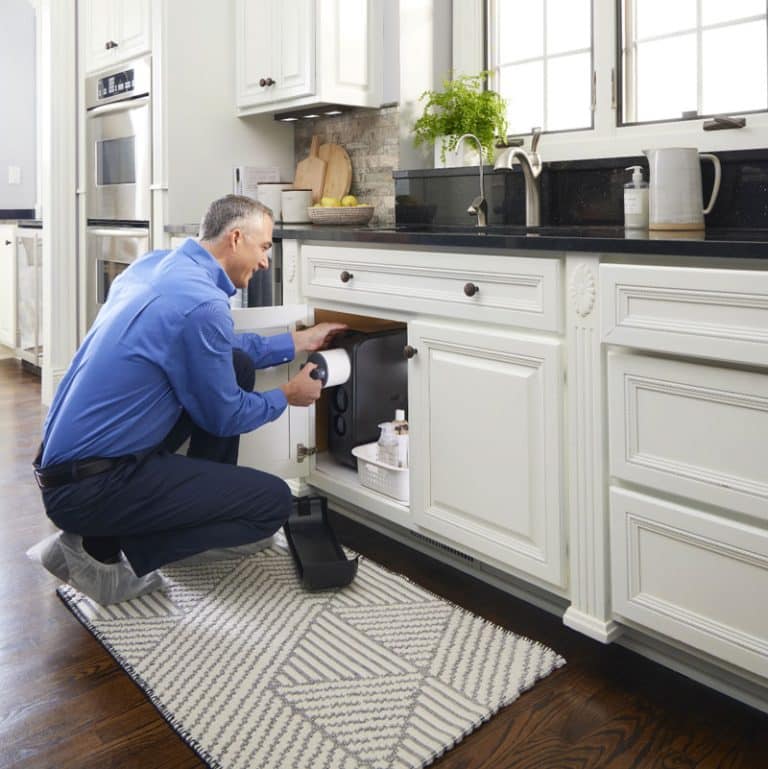
Salt refills, checking for bridges, and basic resin cleaner treatments are safe for any homeowner to handle. Anything involving the control valve, injector, or resin bed replacement calls for a trained technician.
Culligan of Red Wing has been serving households across Red Wing, Lake City, and the surrounding river towns for decades, and our technicians know the water in this region, from the mineral content in city water to the iron levels common in private wells.
Trying to diagnose valve or timer issues without the right tools often makes the problem worse or masks a bigger issue until it fails completely. A service visit typically costs less than replacing a resin bed you damaged trying to fix it yourself.
Water Softener Maintenance FAQs
Below are answers to some of the most common questions Minnesota and Wisconsin homeowners ask about water softener maintenance.
How often should I add salt to my water softener? Check the brine tank every four to six weeks. Most households refill every one to two months, but usage varies with household size and water hardness.
Can hard water damage my appliances if my softener isn’t working right? Yes. Scale buildup shortens the life of water heaters, dishwashers, and washing machines, and reduces their efficiency along the way.
Why does my water still feel hard even though the softener is running? This usually means a salt bridge, mushy salt, a worn resin bed, or a system that’s undersized for your household’s water use. A technician can pinpoint which one applies to you.
Is it normal for my softener to use more salt in winter? Some increase is normal since holiday guests and extra laundry raise water use. A sharp, unexplained jump is worth a service call.
How long does a water softener typically last? With regular maintenance, 10 to 15 years is standard. Some components, like the resin bed, may need replacing sooner, depending on water quality.
If your water softener maintenance is overdue or your system isn’t performing as it should, Culligan of Red Wing can help. We also offer a free basic water test if you want to know exactly what your system is working against.